Hellas-Express


ex Balkanmodels Forum

OSE Ψ refrigerators - Model upgrading & details by P87 - standards

OSE Ψ refrigerators - Model upgrading & details by P87 - standards

Postby Dimitris » Fri Jul 26, 2013 11:59 pm

Hello people.

I attach some pics of my upgraded PROTO: 87 2-axled refrigerator wagon (Ψ3 named by ΟΣΕ). I am very new in PROTO: 87, so it's very logical to make mistakes. I like PROTO: 87 upgrading of rolling-stock, as I see a model train to operate to the prototype in scale.
As you know PROTO: 87 concentrates on operation of wheel/rail exactly to the prototype: working-suspension mainly in 2-axled wagons, exact wheels, exact rails, exact couplings, etc. The track I use (BAHNSINN, Germany) consists of 3 x 30meters sections = 3 x 344.82mm track-lengths (In Greece, we used lengths of 18-36meters - french system, however with german and french permanent way / track materials), with:
- code 70 nickel/silver rail-profile = S49 rail-profile of 1960s (49.43kgrs/m).
- cast brass fastenings of the type K: Klemmplatte (used in Greece either with wooden or with steel sleepers)
- laser-cut wooden sleepers

A. The upgrade of the buffer-beam (plank) (Pufferbohle) consists of:
1. Screw-couplings (Schraubenkupplungen / Atellage a vis) out of brass, blackened, from WEIMANN HO (1: 87).
2. Hooks out of 0.3mm-brass wires - glued underneath the coupling-plates (Kupplungsflänsche / plaque d'attelage), to protect the couplings and the other parts of the bufferbeam, when hanged on them, during train movements according to the prototype.
3. Airbrake-pipes (Bremssläuche / Accouplement de frein) out of brass casting (Messingguß), from WEINERT HO (1: 87).
4. UIC - Shunting-steps (Rangierertritte) out of etched nickel/silver parts, from ÜDO BOHNLEIN HO (1: 87).
5. Shunting handrails (Rangierergriffe): I used already bended brass handrails of 0,3mm-diameter (WEINERT HO (1: 87)), in which I have hammered their ends, to make their circular shape as orthogonal and wide. Then I used a needle on my hand-'archimedes'-drill, to make small holes on them, for passing through 0.3mm-brass wire. Then I have soldered the wire, and then I have cut with a smooth cutter (that makes they area that is cut very smooth) the excess. And then I have added them with super glue (but carefully with a needle, for not having excessive glue) below the buffers.
6. High-power buffers (Hochleistungspuffer) out of brass with 65t - Endforce of the bufferplate (according to prototype), from WEIMANN HO (1: 87). This type is constructed only with bufferplates screwed (Pufferteller geschraubt), and their Bufferplate-diameters are: either 450mm = 5.2mm in HO (1: 87) and 340mm = 4.3mm in HO (1: 87) (i.e. DB Taems890, DB Es), and they have a length of: 620mm to prototype.
7. Buffer plates before buffers (Spannplatte) out of brass castings (Messingguß), from WEIMANN HO (1: 87).

B. The upgrade of the brake-system (systeme de frein / Bremsanlagen) consists of:
1. Triangle de frein (force) (Bremsdreiecke) and Balancier hauts out of etched brass parts, from WEINERT HO (1: 87).
2. Cylindre du air (Bremszylinder) and Balancier (Bremshebel) out of brass castings (Messingguß), from WEINERT HO (1: 87).
3. 0,5mm - brass wire (laiton fil / Messingdraht) for the connections of the brake-system to the airbrake-pipes (Accouplement de frein / Bremssläuche) from WEINERT.
4. The Distributeur (Steuerventil) is from ROCO HO (1: 87).
5. The Reservoir du air (Luftbehälte) is from ROCO HO (1: 87).
6. Finally the Etriers (Bremsfachschlingen), I have to search and find similar to the prototype, or probably make it out of brass.

C. Exact wheelsets to the prototype:
FREMO : 87 / PROTO: 87 blackened nickel/silver wheelsets - 10,57mm in diameter (type: BA88/72 - construction-year after 1972) from WEIMANN HO (1: 87) = 920mm exactly to the prototype.

Image
Image

As you see in the last pic of the prototype in the railway station of Thiva (December 2012), the coupling is ''missing'' / stolen, but the hook is there.. Thank God.. They don't take care our rolling stock and infrastructure at all in Greece as you know...

I like greek train models, because they are unique, but unfortunately, this is the only greek model, I've got until now. In the future, I will get some more and upgraded by PROTO: 87 stnadards.

I saw all your posts, and I learn more about greek rolling-stock. They are very helpful.

Thank you very much for watching

Dimitris
Last edited by Dimitris on Tue Oct 07, 2014 8:10 pm, edited 14 times in total.
User avatar
Dimitris
 
Posts: 411
Joined: Tue Jul 23, 2013 4:59 pm

Re: OSE refrigerator wagons

Postby GAZKGK » Sat Jul 27, 2013 12:12 am

As i can see..... your model is Ψ3 01 73 824 0 264-6 .....

Lets see the real one ... :mrgreen: :mrgreen: at Nea Magnisia, Thessaloniki


Ψ3 01 73 824 0 264-6 (ΜΑΓΝΗΣΙΑ) - Αντίγραφο.JPG
User avatar
GAZKGK
 
Posts: 486
Joined: Thu Jul 25, 2013 11:21 am

Re: OSE refrigerator wagons

Postby BarbaPanagos » Sat Jul 27, 2013 12:18 am

Hi Dimitris, welcome on board!

Thanks for all the info and photos, although it's over my modeling skills I always enjoy such great efforts. I think Andreas is going surely to appreciate your great work :D

edit OK, now you know who has all the info about the real thing ;)
User avatar
BarbaPanagos
Site Admin
 
Posts: 2009
Joined: Wed Jun 05, 2013 7:21 pm

Re: OSE refrigerator wagons

Postby Dimitris » Sat Jul 27, 2013 1:22 am

Hi guys, thanks for the replies.

Actually, I also forgot to say, that the refrigerator wagon, also needs new handrails (Griffstangen) on the sides of the bodyshell, as well as 2 of them on the part of the bodyshell, where the bridge (Bremsbühne) is. They can be constructed by 0.3mm - brass wire. However, the ends with the holes, will recieve 0.2mm brass-wire and not a 0.3mm one.

I prefer metal parts, more than plastic to do rail modelling, but even plastic parts are OK to me.

Thanx

Dimitris
User avatar
Dimitris
 
Posts: 411
Joined: Tue Jul 23, 2013 4:59 pm

Re: OSE refrigerator wagons

Postby Dimitris » Sun Jul 28, 2013 12:55 am

Hello again people and good morning.

I sent you some pics of my own constructed shunting handrails by bended brass handrails of 0,3mm-diameter (WEINERT HO (1: 87)).

I repeat how I constructed the handrails (please see the last paragraph): I used already bended brass handrails of 0,3mm-diameter (WEINERT HO (1: 87)), in which I have hammered their ends, to make their circular shape as orthogonal and wide. Then I used a needle on my hand-'archimedes'-drill, to make small halls of them, for passing through 0.3mm-brass wire. Then I have soldered the wire, and then I have cut with a smooth cutter (that makes they area that is cut very smooth) the excess. And then I have added them with super glue (but carefully with a needle, for not having excessive glue) below the buffers. In freight wagons, i.e. Taems890 with MINDEN/SIEGEN bogies from ROCO HO (1: 87), one an additional 0,3mm - diameter brass wire needed, with its end hammered orthogonal, and soldered too, to the already soldered handrail for each of the 4 handrails. It has different handrails that are screwed on wires that are hanged below the buffers. Most of the new freight european cars have those. In the old ones, like the refrigerator car, their are either screwed or nailed below the buffers.

images at imageshack missing

Thanx for watching

Regards

Dimitris
User avatar
Dimitris
 
Posts: 411
Joined: Tue Jul 23, 2013 4:59 pm

Re: OSE refrigerator wagons

Postby BalkanExpress » Thu Aug 01, 2013 8:12 pm

What an interesting string this one about the refrigerator wagons Ψ3.

Can we say we're talking about the most representative freight wagon of the greek railways? Ψ's wagons are present in every yard, scrap yard and siddings all over Greece. Even more; since you get involved with the greek railways, you can see those white wagons everywhere.

Is very representative that an international made as ROCO, made corrections to the tipical german refigerator wagon to create a similar reproduction of the greek Ψ3 (apart to those fantastical addings that Dimitris show us how to improve). Two references ROCO 47056 and ROCO 47056.1 were made. I think they represent the same wagon with the same numeration, isn't it?

frigo.jpeg
ROCO 47056


And what about the Ψ1. Is there any similar model to get transformed?

Does any Ψ2 frigo wagon exists?

Regards

BalkanExpress
BalkanExpress
 
Posts: 472
Joined: Tue Jul 02, 2013 2:20 pm

Re: OSE Ψ refrigerators - Model upgrading & details

Postby BarbaPanagos » Tue Dec 31, 2013 4:32 pm

Dimitri, thanks for the nice shots ;)

I was looking again at the model's photos, all that detail, coupling, steps, hoses and especially the buffers are a great improvement to the base model.


...
User avatar
BarbaPanagos
Site Admin
 
Posts: 2009
Joined: Wed Jun 05, 2013 7:21 pm

Re: OSE Ψ refrigerators - Model upgrading & details

Postby Dimitris » Tue Dec 31, 2013 4:48 pm

Thanx Panagiotis.

I only need to add the last mentioned parts, and the model is 100% complete.

Best wishes for 2014.

Dimitris
User avatar
Dimitris
 
Posts: 411
Joined: Tue Jul 23, 2013 4:59 pm

Re: OSE Ψ refrigerators - Model upgrading & details

Postby Dimitris » Wed Jan 01, 2014 5:37 am

Hello.

Presentation of the springs of the screw-couplings. The same way as in the Eaos106 are cut in appr. the middle and little shorter than that, such as to negotiate curves anfd turnouts.

images at imageshack missing

The following last pic showσ the completed brake-system.

images at imageshack missing

Thanx

Dimitris
User avatar
Dimitris
 
Posts: 411
Joined: Tue Jul 23, 2013 4:59 pm

Re: OSE Ψ refrigerators - Model upgrading & details

Postby Dimitris » Mon May 05, 2014 12:47 am

Hello.

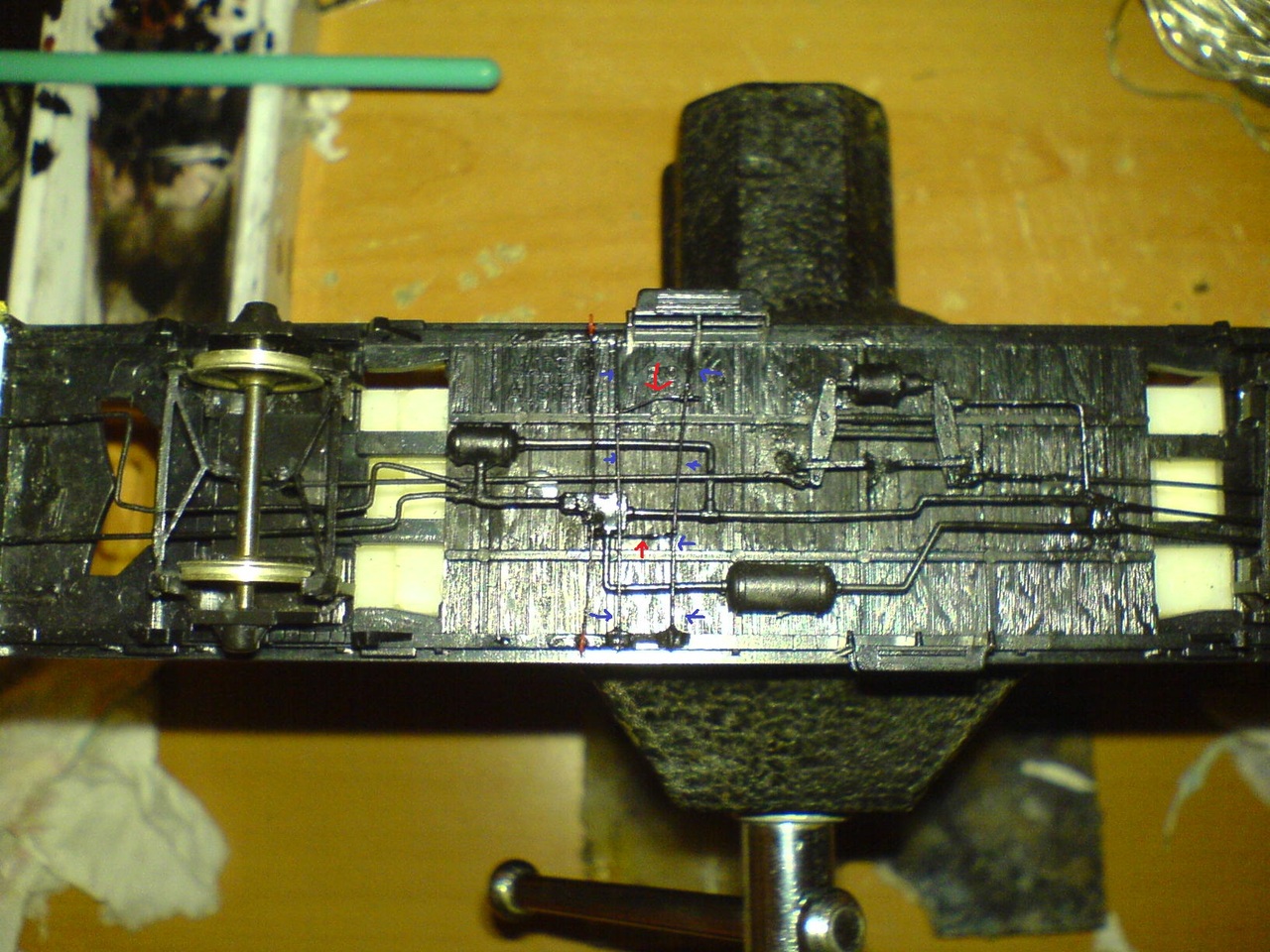
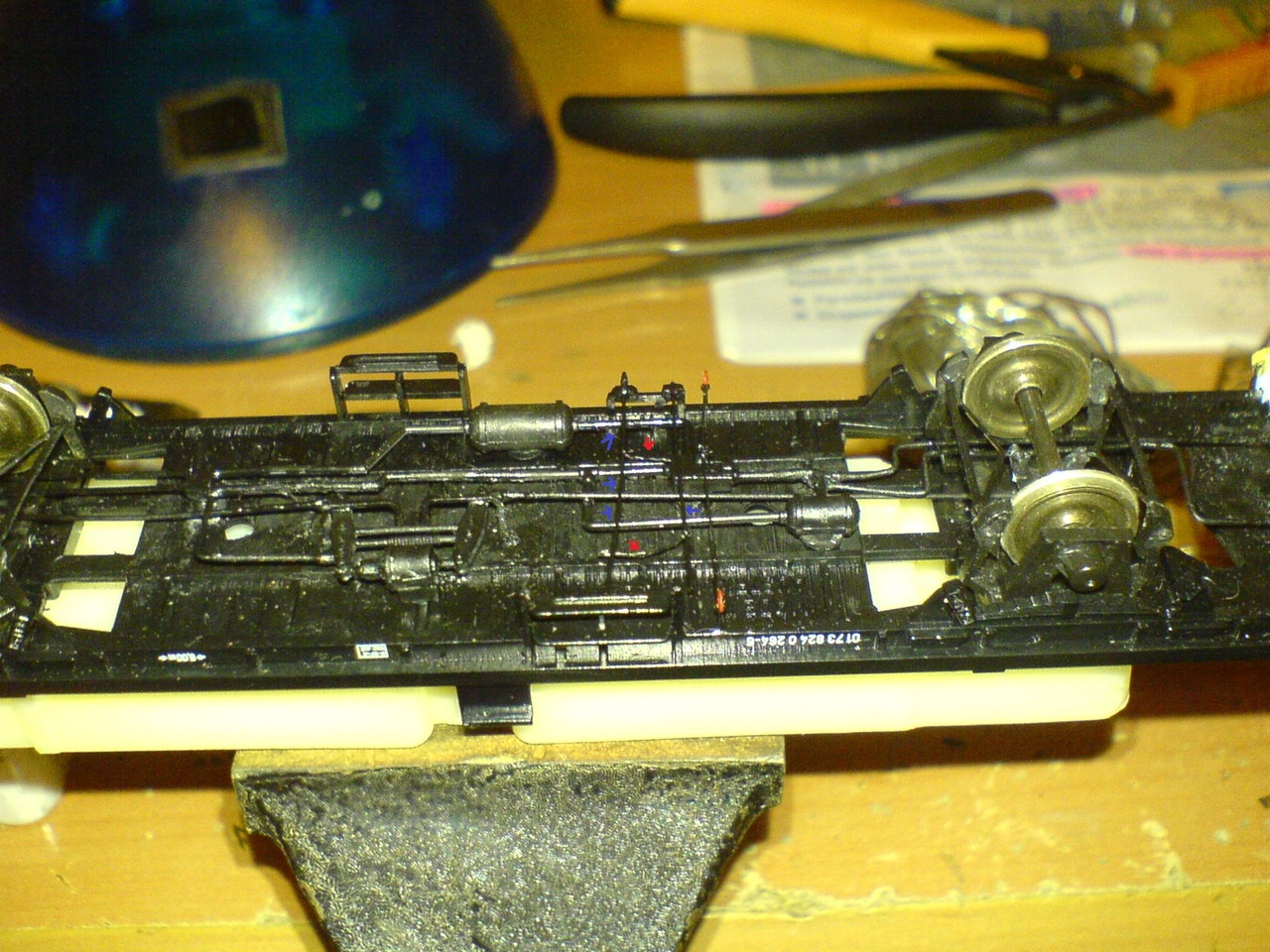
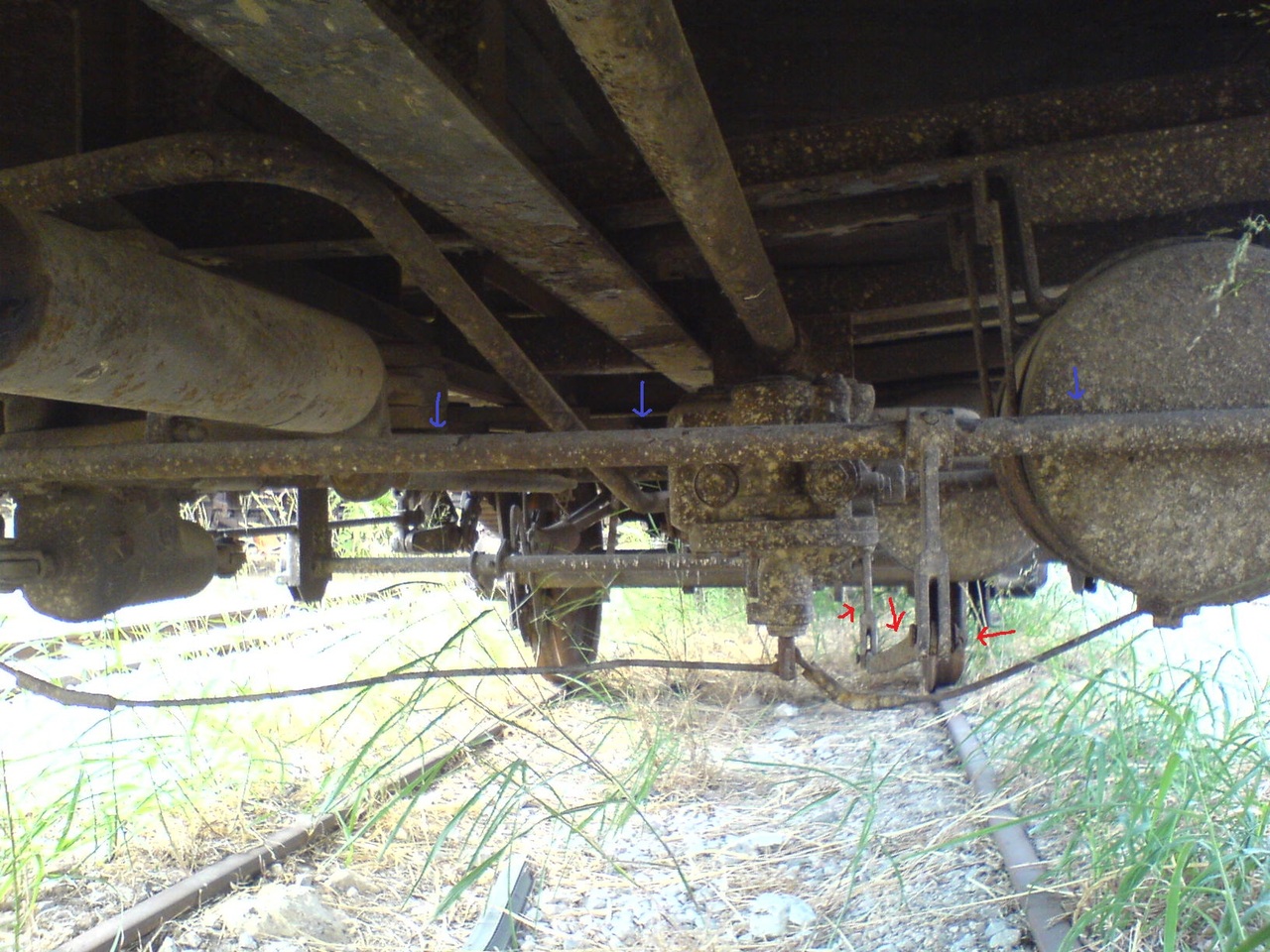
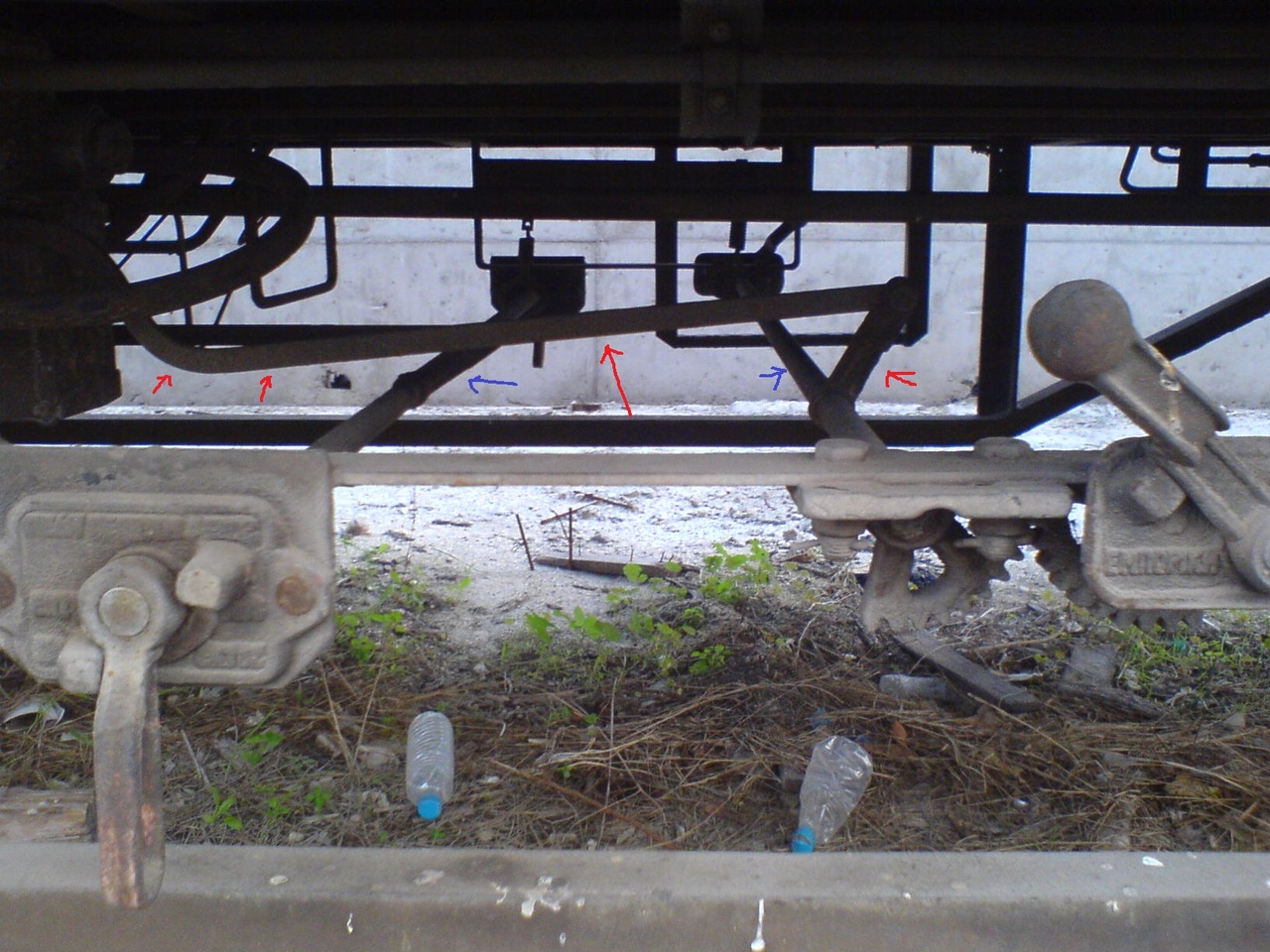
Levers (red arrows) connecting the main levers and the distributor. The blue arrows show the 0,3mm brass wires for the parrallel connection of the main levers, and the Red ones the nickel/silver levers.
Image
Image
ImageRentis 02.10.2013
ImageRentis 31.01.2014

I also have to add:
- the NEW couplings with 3,9mm distance (end of bufferplate - end of coupling-hook), cause I removed the old ones, as they have the wrong distance (4,4mm) from their pockets, and not the correct one (3,9mm) from their moulds (this can be used mainly for plastic models, that don't need a coupling pocket - as they have it moulded on their chassis, so the distance of about 2,0mm, is moulded on the back of the hook of the coupling, such as the correct one can be obtained (3,9mm), when installed. However, the mould must be drilled and cut flat for the correct distance (3,9mm) to be obtained).
- protectors (Bremsfangschlingen) of the brake-triangles
- my HANDMADE handrails for the body-shell - 6 it total (2 on each side, and 1 on each side, where the door of the refrigerator is).

Unfortunately, it needed more installmens and corrections.

I will update.

Thanx

Dimitris
User avatar
Dimitris
 
Posts: 411
Joined: Tue Jul 23, 2013 4:59 pm

Next

Return to Members Modelling Projects, Layouts & Collections

Who is online

Users browsing this forum: No registered users and 4 guests